
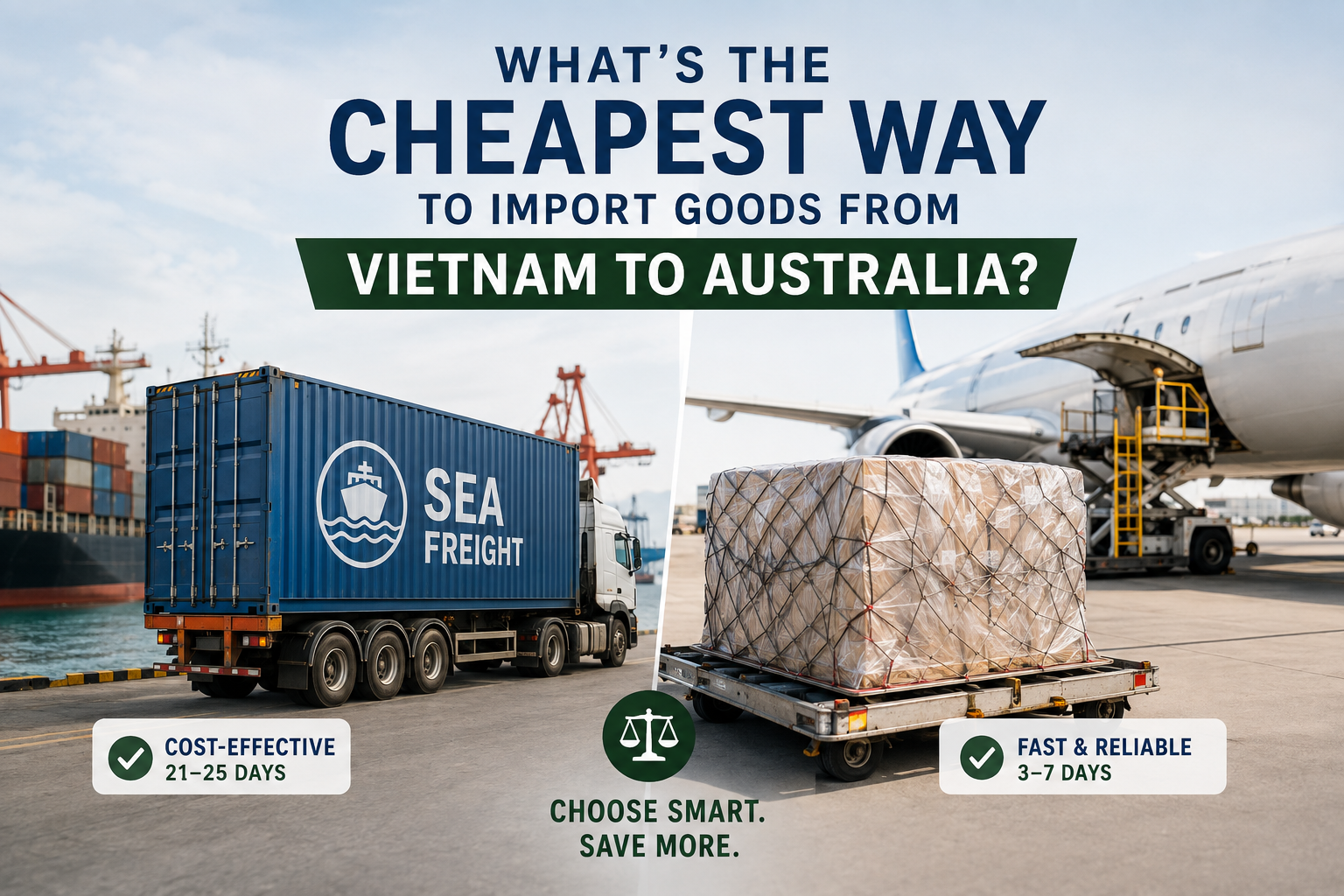
What's the Cheapest Way to Import Goods from Vietnam to Australia?
The short answer: sea freight is almost always cheaper than air freight, and within sea freight, the real savings come from choosing the right container option, getting your duty classification right, and avoiding the paperwork mistakes that turn a simple shipment into an expensive one. Here's where the cost actually comes from — and where it doesn't.
Sea Freight vs. Air Freight: The Biggest Cost Lever
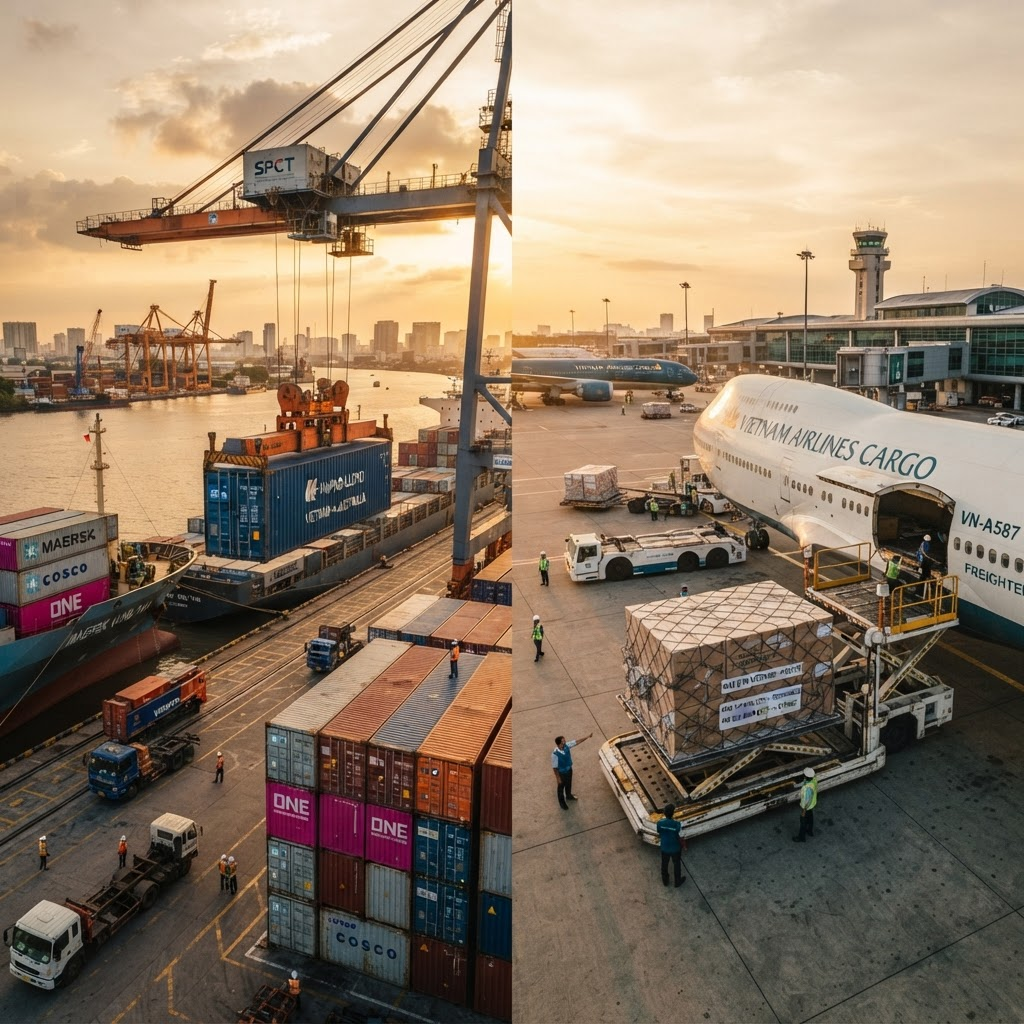
This is the single biggest decision affecting price. Sea freight (21–25 days) costs a fraction of air freight (3-7 days) per kilogram. If your business can plan a few weeks ahead — which most restocking and bulk orders can — sea freight is the default cost-effective choice. Air freight earns its higher price when a delay would cost you more than the freight premium: a stockout, a missed launch, a client waiting on an order.
FCL vs. LCL: Don't Pay for Space You Don't Need
If you have enough volume to fill a container, a full container load (FCL) gives you the best per-unit cost. If you don't, less-than-container load (LCL) — where your goods share a container with other shippers' cargo — lets you pay only for the space you actually use, rather than an entire container sitting half empty. Choosing the wrong one of these for your volume is one of the more common ways businesses overpay without realizing it.
The Duty and Customs Side of Cost
Getting your paperwork and classification right isn't just about avoiding delays — it directly affects what you pay. A correctly assigned HS (Harmonized System) code determines your duty rate, and Vietnam and Australia have a trade agreement (AANZFTA) that provides preferential — often significantly reduced — tariff rates for qualifying goods. Missing out on this because of an incorrect code or missing certificate of origin means paying more duty than you needed to. This is a legitimate, documented process, not a workaround — but it does require someone who knows how to apply it correctly.
Why "Cheapest" Isn't Always the Lowest Quoted Price
We tell every new client the same thing: work with a partner that guarantees no extra or hidden charges beyond the quoted price. A low headline rate that turns into a higher final bill because of "surprise" documentation fees, storage charges from a delayed clearance, or a shipping method that wasn't actually right for your cargo isn't actually cheap — it's just cheap-looking on paper.
Where First-Time Importers Overpay Without Realizing It
In our experience, the single biggest cost driver we see clients get wrong is choosing the wrong shipping method for their actual need, combined with incomplete paperwork that causes delays — and delays at customs almost always carry a cost, whether that's storage fees, demurrage, or a rushed re-booking. Getting the method and the paperwork right the first time is, in practice, the cheapest thing you can do.
A Note on Small Shipments
If you're shipping a small quantity, don't assume the cost will scale down proportionally. Documentation, handling, and minimum customs processing carry largely fixed costs regardless of shipment size — so a small shipment can end up costing more per unit than a larger one. Consolidating smaller orders into fewer, larger shipments (LCL is built for exactly this) is usually the better economic move if your timeline allows it.
How This Connects to Timing
Cost and speed are linked. If you want the full breakdown of how long each method actually takes and what causes delays, And if you're still deciding between sea and air, or FCL and LCL, for a specific shipment,
Get an Accurate Quote
Cost estimates online are only ever a starting point — the real number depends on your product, volume, and shipping method. Get a quote from our team and we'll give you an accurate, no-surprises number based on your actual shipment.
FAQ
Is LCL always cheaper than FCL?
Not always — it depends on your volume. Below a certain volume threshold, LCL is cheaper; above it, FCL becomes more cost-effective per unit. We can tell you where that line sits for your specific shipment.
Can I reduce the duty I pay on imports from Vietnam?
Yes, legitimately — through correct HS code classification, Country Origin Certificate and using the Vietnam-Australia trade agreement's preferential tariff rates where your goods qualify. This needs to be done correctly and documents processed properly.
Why did my quote come in higher than expected?
Usually one of: the wrong shipping method for your volume/timeline, missing documentation that triggered extra fees, or a shipment small enough that fixed costs make up a larger share of the total.

